


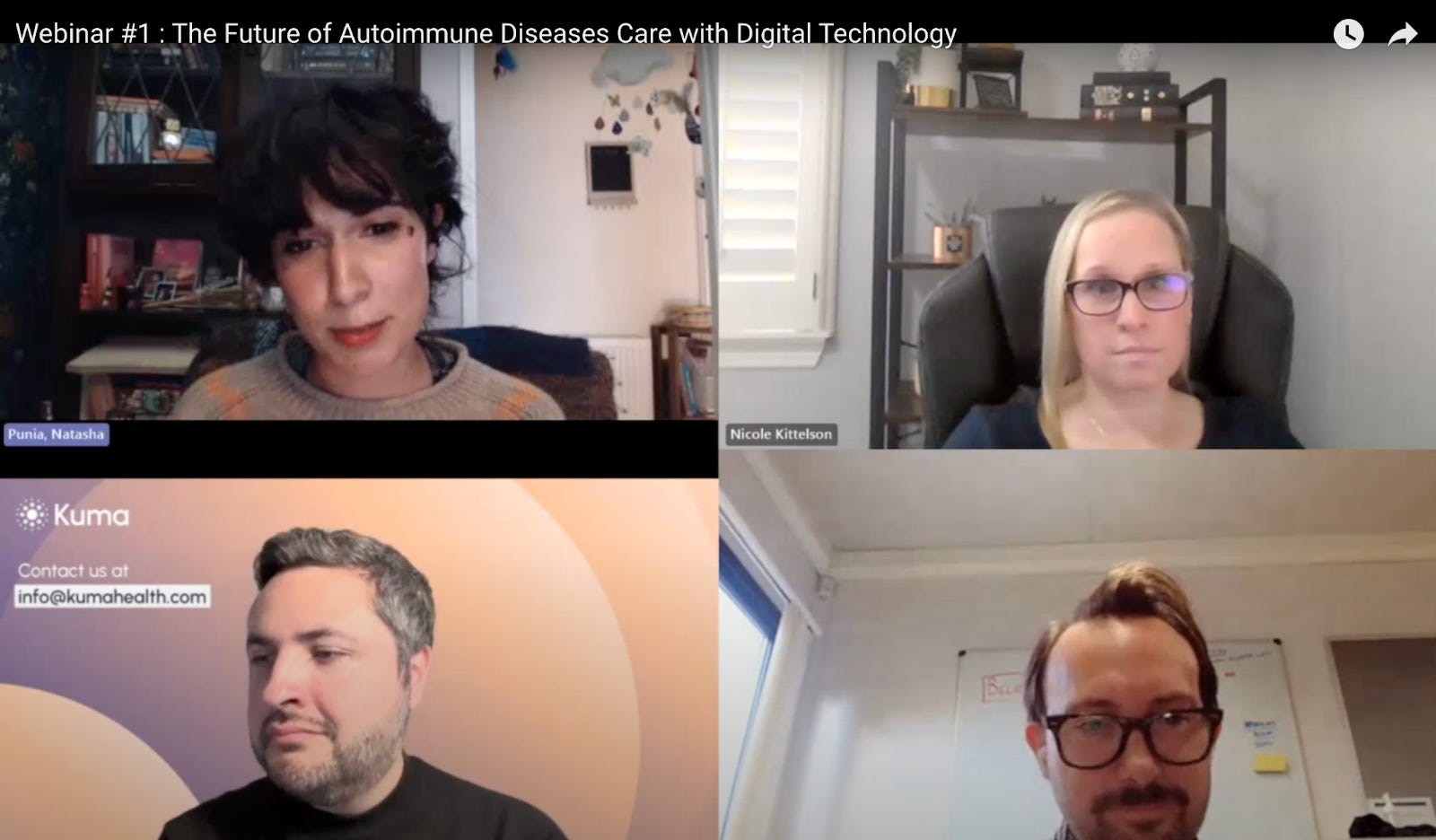
Discussions like these don't come around often, and being asked to participate — especially alongside a consultant from my own hospital — was a thrilling opportunity. Despite my work as a business consultant, project manager and a health inequalities advocate, I’m naturally shy and reserved. In group settings, I usually sit back and listen quietly. But this time, things were different!
From the start, the introductions were warm and engaging, setting the tone for the well-balanced, constructive discussions that followed. They could have gone on for hours.
The panel consisted of myself, Nicole Kittelson, Director of National Partnerships at the Arthritis Foundation, Dr. Chris Wincup, consultant Rheumatologist at King's College Hospital, and Dr. Karim Sandid, Co-Founder and Chief Medical Officer at Kuma Health.
What Did We Talk About?
We covered a range of topics crucial to the future of autoimmune disease care:
The day-to-day struggles patients face, and how these experiences shape not only their lives but also the care they receive.
The role of technology, scientific advancements, and online communities in addressing these challenges and improving patient outcomes.
How clinicians can deliver more efficient care, and the impact these innovations have on pharmaceutical research in developing life-changing therapies.
When discussing the future of healthcare in historically rigid systems, such as the NHS in the UK, where patient-centred care has not been the focus, moments of tension and challenge naturally arose. But, it’s precisely these constructive, and at times difficult, conversations that are essential for pushing boundaries and driving innovation in how care is delivered.
Main Talking Points
Recognised Common Challenges: Getting a Diagnosis
Nicole Kittelson rightly pointed out that the first challenge begins at diagnosis. Getting the right diagnosis (or the right-fit diagnosis) is often a long and painful journey for many autoimmune patients.
Appointments are usually six months apart, meaning healthcare professionals only get a snapshot of the patient’s condition at that particular time.
With the current workforce crisis in many healthcare systems, including the NHS, securing appointments is becoming increasingly difficult.
Not knowing how to make the most of the short time available during appointments often leads to anxiety for patients.
Exciting Developments in Technology: But It Won't Solve Everything
While technology holds great promise, it’s only part of the solution. Thoughtfully designed, it can reduce the burden on patients, such as managing their own treatment, symptoms and side-effects in-between appointments. AI-driven tools, like those developed by Kuma Health, can analyse data on symptoms, medication responses, and lifestyle patterns to provide personalised insights, easing the mental load of tracking health. This allows patients to focus more on living their lives, while clinicians gain the data they need for informed decision-making.
Listen to Dr Chris Wincup explain why co-production (with patients) is vital:
However, these advances can only complement, not replace, patients’ voices. During the webinar, we discussed how photos can be useful in tracking lupus-related rashes but less effective for conditions like Rheumatoid Arthritis. Even so, they document that something isn’t right between appointments.
Ultimately, technology’s true value lies in enhancing dialogue between patients and healthcare providers. Tools like AI ought to streamline the process, providing clinicians with the necessary data while ensuring patient concerns are taken seriously.
A Word of Caution: Technology Must Be Patient-Centred
A key point was the risk of technology dictating care instead of empowering patients. Dr. Chris Wincup highlighted that tracking tools may soon monitor sleep cycles and disease progression. But we need to ensure these tools enhance patient autonomy, not undermine it.
For me, setting my own success criteria — such as judging treatment effectiveness by the number of flare-ups I experience — has been empowering. Data like sleep patterns is valuable, but patient experience should take precedence. If technology tells me I’m improving but I don’t feel better, whose assessment matters more?
What’s Next?
I left the discussion feeling incredibly optimistic, and I hope you did too. The future of autoimmune disease care is evolving rapidly — and with collaboration at the heart of it, we’re moving toward a system that genuinely puts patients at the centre.
In the coming months, we’re excited to work more closely with our partners Kuma Health on new content. Keep an eye out for updates, and don't forget to check out the full webinar recording on YouTube if you missed it.