


As a Nutritionist, I can't help but notice the conflicting information regarding the foods we should include in our diets. Some assert that dairy and alcohol are detrimental to health, while others tout dairy's importance as a primary source of calcium and the antioxidant richness of red wine. With such contradictory advice, it's understandable to question whom to trust and how to navigate this intricate landscape, especially when managing a chronic illness.
In this article, I aim to dissect a typical one-day meal diary adhering to the Western-style diet. Through this analysis, I will evaluate whether this dietary pattern provides sufficient macro and micronutrients necessary for optimal health. Specifically, I will delve into the levels of proteins, fats, carbohydrates, vitamins, and minerals to determine their adequacy.
Moreover, I will delve into the broader discussion of healing foods backed by research, draw on my personal healing journey, and share practical wisdom. By sharing this comprehensive guidance, I hope to empower readers to make informed dietary choices thereby enhancing their overall well-being and effectively managing chronic conditions.
Researchers coined a term “western style diet” (WSD) to describe a diet high in ultra-processed foods, fat, sucrose, refined carbohydrates, alcohol, salt and low intake of fibre rich foods, fruit and vegetables. Intrigued by the effects of WSD on health, I embarked on a detailed analysis of a one-day sample menu to scrutinise the nutrient profiles of these foods.
Why is the intake of macronutrients so crucial? Proteins, for instance, are indispensable for sustaining energy levels throughout the day, preventing mid-afternoon energy dips, and are vital for various bodily functions such as muscle tissue development, immune system support, and synthesis of enzymes and hormones. Carbohydrates play a key role in providing the body with energy, while dietary fibres are especially valuable for maintaining healthy bowel function and offering protection against cardiovascular disease and diabetes.
When it comes to fats, it is essential to emphasise the significance of essential fatty acids, such as omega-3 and omega-6, which the body cannot produce on its own. These fatty acids play pivotal roles in supporting brain function, heart health, immune system function, skin health, cellular structure, and mitigating inflammation. Thus, paying attention to the composition of macronutrients in our diet is paramount for optimising overall health and well-being.
Table 1 provides a breakdown of a sample menu adhering to the principles of the Western-style diet (WSD), presenting both solid and liquid intake throughout the day in metric units. Rather than making assumptions about the nutrient composition of the typical WSD, this exercise offers a first-hand look at the numbers and analysis.
Table 1. Typical Western Diet one-day sample:
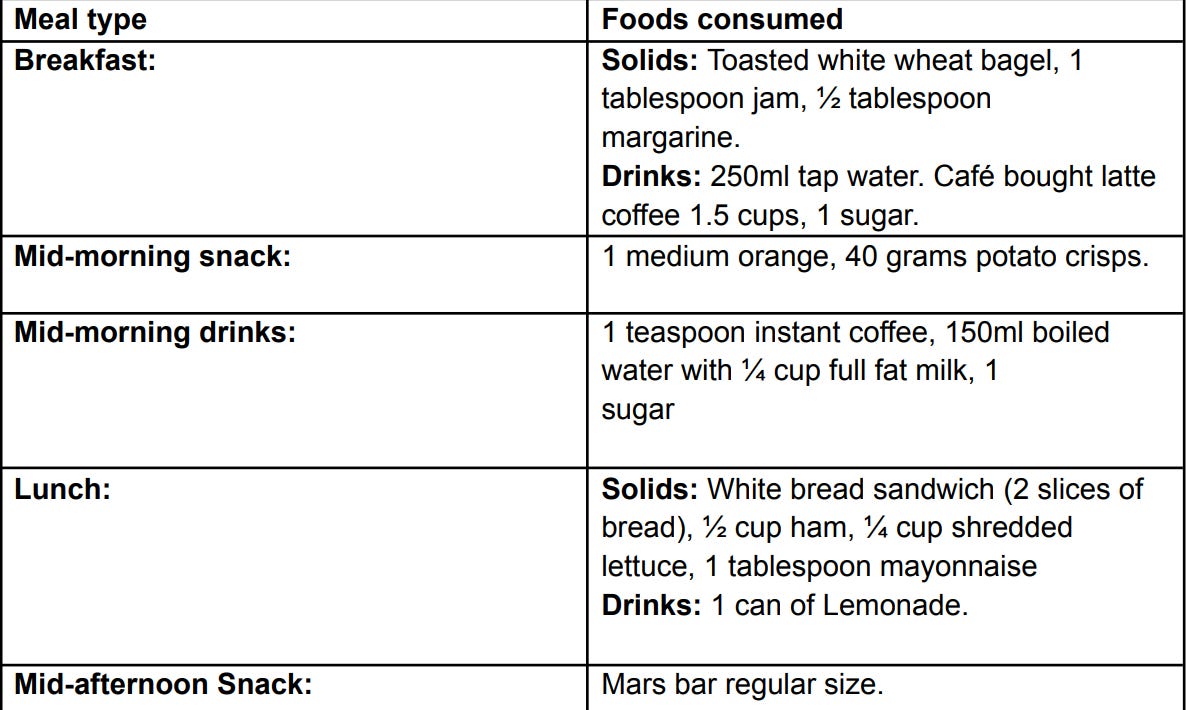
Source: College of Naturopathic Medicine
Click here to download the full table:

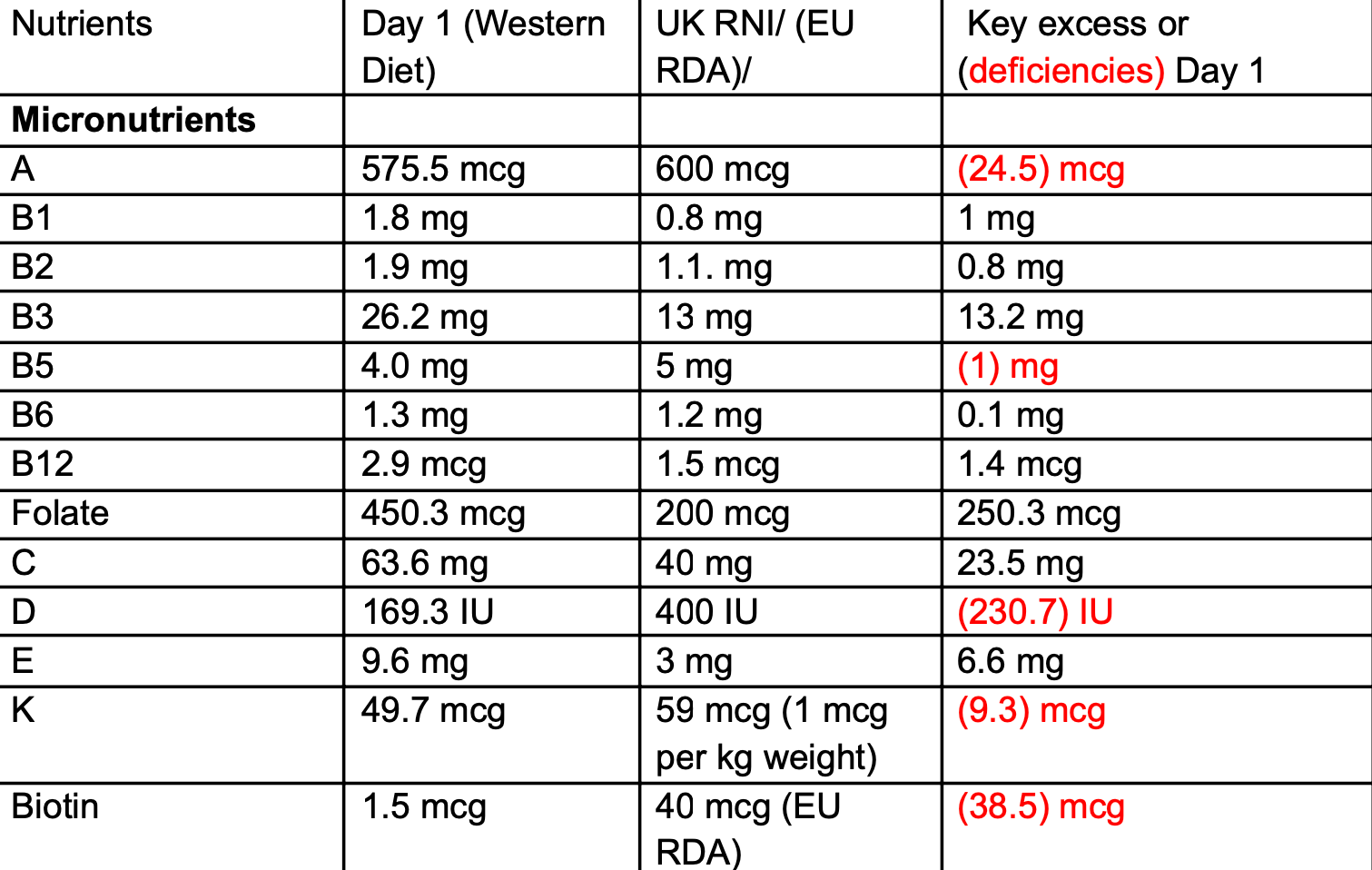
All data from Table 1 was inputted into a Cronometer app using the closest available measurements to obtain a comprehensive nutrient analysis. The resulting data has been organised into three columns:
- "Western Diet" displays the quantities of specific macronutrients and micronutrients in relevant metric units, reflecting the sample menu's adherence to the Western-style diet.
- "UK RNI/EU RDA" references recommended nutrient intake values provided by either the British Nutrition Foundation or the European Food Safety Authority.
- "Key Excess/Deficiencies" indicates the absolute differences between the nutrient amounts in the Western diet and the recommended intake values.
Table 2. The Food Diary Nutrients and key excess/deficiencies against UK/EU RNI/RDA/EAT LANCET planetary guide.
Source: Cronometer (2024)
Click here to download the full table:
The results revealed notable discrepancies in the intake of key macronutrients for Day 1. Proteins, carbohydrates, and fats were found to be in excess by 95%, 28%, and 62% respectively. Sugar intake exceeded the recommended nutrient intake (RNI) by nearly 63%, while fibre intake fell short by 48%, and saturated fats were consumed in excess by 131%.
Further exploration into protein sources revealed that animal proteins exceeded the recommended intake by approximately 54%, whereas plant protein sources were closer to meeting the target. This breakdown was sourced from the Eat Lancet planetary guide, a report by the EAT Lancet commission aimed at addressing poor diets in a sustainable manner.
Additionally, Table 2 includes two other significant data points: the Omega 6: Omega 3 ratio and Glycaemic Load. While the benefits of essential fatty acids (EFAs) are widely discussed, it's crucial to consider the ratio of omega 6 to omega 3 consumption. Since our bodies use the same enzyme for conversion, they tend to favour the more abundant EFA. Monitoring the intake of omega 6 oils, commonly found in vegetable oils and fried foods, is essential, while ensuring an adequate intake of omega 3 through sources like oily fish, chia seeds, and flaxseeds. It's worth noting that both omega 3 and omega 6 oils can become inflammatory when exposed to light and heat during cooking.
Understanding the glycaemic load of foods is also crucial for managing postprandial blood sugar levels, particularly for individuals with blood sugar imbalances. This metric helps assess how different foods affect blood sugar levels after consumption, aiding in dietary management and overall health maintenance.
Let’s delve into the micronutrient status. It's apparent that the foods consumed on Day 1 lack sufficient amounts of essential micronutrients such as vitamin A, B5, D, K, Biotin, Copper, Iron, and Potassium. These micronutrients play pivotal roles in supporting immunity, energy production, clotting factors, electrolyte balance, DNA repair, bone health, and numerous other life-sustaining processes.
It's crucial to acknowledge the limitations of nutrient analysis, which only provide a snapshot based on a single day's sample of foods. To gain a comprehensive understanding of one's diet and health, it's imperative to consider multiple data points and assess the entire dietary pattern.
However, this analysis offers valuable insights into potential deficiencies and serves as a starting point for addressing nutritional imbalances.
Here are some actionable steps to improve overall health and nutrient intake:
Boost Veg & Fruit intake: enhance the variety of fruits and vegetables in your diet, aiming for a spectrum of colours to ensure a diverse array of vitamins, minerals, and antioxidants. Incorporating seeds (chia, flaxseed, sunflower, pumpkin, sesame), nuts (brazil nuts, almonds, walnuts), herbs (coriander, parsley, basil, thyme, rosemary), and spices (ginger, turmeric, cumin, coriander) can further enhance nutritional diversity.
Animal & Plant proteins: opt for a balanced intake of organic animal proteins and plant-based sources high in protein, such as grains (buckwheat, quinoa, amaranth) and legumes (red kidney beans, lentils, chickpeas). Aim for approximately 1 gram of protein per kilogram of body weight, prioritising quality over quantity by choosing organic meats with a lower inflammatory load.
Boost hydration: Ensure adequate hydration of 1.5 to 2 litres per day, preferably with filtered water. Limit intake of dehydrating beverages like coffee and caffeinated teas, and consider reducing or eliminating them if symptoms worsen.
Focus on whole foods & “Alive” Foods: Cut processed foods and prioritise fresh foods as these maximise the levels of nutrients. Cooking at home and planning meals in advance is the best investment in self while saving money.
Cut inflammatory foods:
- Gluten is a recent phenomena in the context of evolution. Humans lack enzymes to break down gliadin, a protein found in gluten also known to cause systemic inflammation. Gluten is linked to aetiology of many chronic illnesses such as Hashimoto’s, Alzheimer’s or Coeliac & often cannot be diagnosed through tests.
- Dairy contains sulphuric acid and is associated with increased acidity of tissues. Dairy is implicated in insulin resistance & people with compromised gut function often lack enzymes to break down lactose.
- Refined sugars –are highly inflammatory. Make ingredient labels your best friend. You would be surprised at all the ways they disguise these nasty additives: corn syrup, rice syrup, juice concentrate etc.
- Vegetable oils – used as emulsifiers and added to a wide variety of foods, snacks, plant milks e.g. rapeseed oil, sunflower oil etc. When heated these form free radicals introducing oxidative damage. Cook with extra virgin olive oils to support health. Butter and coconut oils are heat stable though predominantly saturated fat & hence need to be measured.
- Alcohol and smoking are important lifestyle considerations. Both are implicated in forming free radicals which inhibit healthy cellular function in our body.
It is worth noting however every person is unique and individual adjustments are crucial in every healing journey. Life with a chronic condition can be a lonely and both physically and emotionally draining journey. I have so much empathy for you. Being there myself with Hashimoto’s I can wholeheartedly say healing is possible and is within reach. Taking small steps and introducing sustainable changes are key to healing. Remember to be kind and ask yourself a question: what is this condition here to teach?
Much love,
Your nutritionist Nuri
